iPhone vs Galaxy S: The Rivalry That Changed What a Phone Could Be
From Retina and Super AMOLED to the S Pen, Face ID and folding screens, Apple and Samsung kept offering different answers to the same question: what should a better phone do?
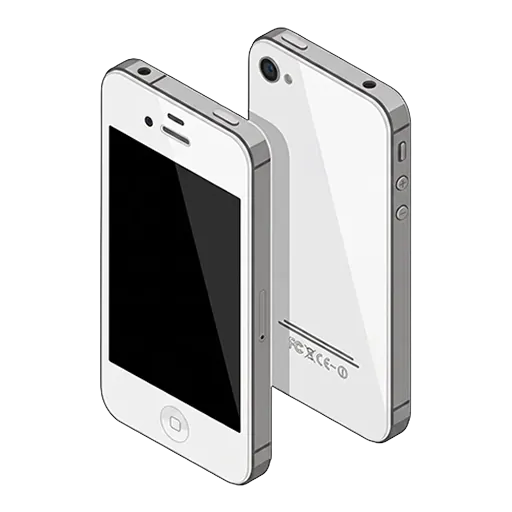
2010: two approaches to the screen
Place an iPhone 4 beside the first Galaxy S and their different priorities are immediately visible. Apple offers a 3.5-inch Retina display, with text drawn in unusually fine detail. Samsung offers a larger, 4-inch Super AMOLED screen. The Retina display draws attention to fine detail; the Super AMOLED screen gives the same content more room.
These displays mark an early stage in a rivalry that would extend well beyond the two handsets. Galaxy S was becoming Samsung’s answer to the iPhone and a prominent expression of Android. The longer-term question was which company could make its phone feel more useful once the excitement of a new purchase had passed.

Taylor Shomaker · Wikimedia Commons · Public domain · Taylor Shomaker · Public domain

Buying into apps and software
When announcing the iPhone 4, Apple also discussed what its software could offer beyond the glass-and-steel hardware: games, books, video editing and software for developers. The App Store meant the buyer was choosing access to activities as well as a device. Hardware and software could make one another more valuable.
That helps explain why a specification contest never settled the rivalry. A larger display could be an obvious advantage for a particular task, yet a favourite app or a familiar workflow could outweigh it. Samsung had to compete with that whole experience as well as the hardware. For Apple, the challenge was the reverse: a strong software platform did not remove the need to keep improving the object people actually held.

Jytim · Wikimedia Commons · CC BY-SA 4.0 · Jytim · CC BY-SA 4.0

Design and reception problems
The iPhone 4 also shows where Apple fell short. In July 2010, Apple acknowledged reports of sharp drops in displayed signal bars when the phone was held in a particular way. Its initial public explanation focused on the formula used to display reception strength. That statement records Apple’s response at the time; it does not establish that every reception complaint was merely a graphic on the screen.
The episode shows how the rivalry played out in daily use. A product could introduce a memorable display and still provoke frustration during an ordinary call. The launch specifications also carried limits: FaceTime initially depended on Wi-Fi, for example. These details shaped everyday use more directly than an abstract score for innovation. Samsung’s most ambitious new phone design would eventually face the same scrutiny when reviewers received it.

Beamish4 · Wikimedia Commons · CC BY-SA 4.0 · Beamish4 · CC BY-SA 4.0
_-_Back.jpg)
Samsung adds space and pen input
At IFA in 2011, Samsung introduced the Galaxy Note with a 5.3-inch display and an S Pen. The increase in size mattered beyond the comparison chart. A bigger surface and a pen suggested different activities: marking an image, writing something down, or reading a document with more of the page in view.
The Note might seem to mark the moment Samsung stopped following, though the history is less clear-cut. The product does show Samsung choosing to explore beyond the iPhone’s contemporary shape. It could offer more space and a different way to put thoughts onto the screen.
Then the iPhone gets bigger too
In 2014, Apple introduced the 4.7-inch iPhone 6 and the 5.5-inch iPhone 6 Plus. The iPhone now offered two substantially larger sizes. Coming after the Note, the change showed that Apple, which had shaped so much of the smartphone market, was also willing to revise its approach.
The dates do not prove that Samsung alone caused Apple’s decision. They do show that both companies wanted to offer larger screens. A rival’s strongest idea can become something the entire category must address, even when each manufacturer packages it differently.
Some changes sit beneath the glass
A photograph can readily show a change in screen size, while a processor architecture is harder to convey on a magazine cover. Yet the iPhone 5s, introduced in 2013, brought Apple’s 64-bit A7 chip and Touch ID. The latter made a fingerprint part of a familiar action: using the home button.
The iPhone X took another route in 2017. Its TrueDepth system used infrared components to map a face, and Face ID connected that recognition to unlocking, payments and access to apps. Several parts had to work together so recognition could serve as authentication. Integration can bring meaningful innovation, even if it attracts less immediate attention than a folding screen.
A screen that folds must survive folding
Galaxy Fold showed how far Samsung was willing to pursue a different shape, although its 2019 launch was delayed. Samsung postponed the planned launch, then announced construction changes in July. The top protective layer extended beyond the bezel, while additional caps, reinforcement and smaller gaps addressed vulnerable areas around the screen and hinge. Samsung had to revise the product before putting it on sale.
Sales began in September, with markets following on different dates. An account of the launch needs to include both the work and risk involved, and Samsung’s decision to correct the problems and ship it. A folding phone had to make a flexible display, moving structure and software cooperate. The launch delay showed how much work remained between demonstrating the concept and producing a phone for everyday use.

Sandro Scharf · Wikimedia Commons · CC BY-SA 4.0 · Sandro Scharf · CC BY-SA 4.0

AI moves the contest into everyday tasks
With the Galaxy S24 series in January 2024, Samsung put Galaxy AI at the centre of its pitch. The examples were deliberately ordinary: translating a phone conversation, summarising notes, editing a photograph and searching for something visible on the screen. Circle to Search also made the partnership with Google explicit. Samsung’s proposal combined its own product decisions with capabilities developed across a wider ecosystem.
When assessing innovation, a feature does not become less useful because partners helped build it, though one company should not receive all the credit. Nor does a launch demonstration settle how well it will fit every language or task. Samsung broadened the focus from how much detail the next phone could capture to include what it could help the owner do with information.
The next contest is how long it lasts
The S24 announcement also promised seven generations of operating-system upgrades and seven years of security updates. These are two distinct commitments. They describe planned support, not seven years of delivery already completed. Even with that distinction, the promise brings planned support into the discussion of what a phone purchase includes, alongside new hardware.
Longevity attracts less attention than a new hinge but belongs in the same discussion. After the launch event, people use the device through changing apps, accounts and routines. The rivalry can cover both unfamiliar new experiences and ways to keep an existing phone useful for longer.
Why a familiar iPhone can still be compelling
Apple’s answer also extends beyond the next handset. In 2014, iOS 8 and OS X Yosemite brought Continuity features including Handoff: begin an activity on one device and continue on another. Instant Hotspot and iCloud Drive offered other ways for devices and files to work together. A phone could become one part of a larger arrangement rather than an isolated purchase.
That provides a practical explanation for the appeal of familiarity, without claiming to measure why every owner stays. If daily work already moves between an iPhone and a Mac, replacing the phone may involve reconsidering that routine. This is an interpretation of the product design, not proof that users are trapped or that competitors cannot offer connected experiences. Convenience is part of what people buy, alongside the hardware.
The rivalry changes the question
These developments offer a more useful way to compare iPhone and Galaxy than repeatedly asking who copied whom. Samsung repeatedly explored the physical possibilities of a phone: a larger canvas, a pen, a screen that folds. Apple repeatedly invested in how components and devices work together: silicon, authentication and continuity.
A new shape is easy to recognise as new. A system that removes a small interruption may be easier to appreciate after months of use. For the buyer, the question is personal and concrete: which change gives you something worth having? More than one convincing answer has kept the rivalry relevant since it became so visible in 2010.
2010: iPhone 4 paired a 3.5-inch Retina screen with iOS 4; Galaxy S brought a 4-inch Super AMOLED screen to Samsung’s Android flagship.
2011: Galaxy Note combined a 5.3-inch display with the S Pen, making screen size part of a broader proposal about how to use a phone.
2013 and 2017: iPhone 5s brought A7 and Touch ID; iPhone X connected TrueDepth facial sensing with Face ID authentication.
2019: Galaxy Fold’s planned launch was delayed; Samsung detailed structural changes in July and began selling the revised device in September.
2024: the Galaxy S24 promise covered seven OS generations and seven years of security updates; the two measures should not be treated as interchangeable.
Gizmory editorial conclusion: Samsung made the phone’s possible shapes harder to ignore; Apple made the connections within and around it harder to overlook. Innovation is worth judging by what those choices let people do, not by awarding either company a permanent crown.
Samsung’s experiments with size, input and folding displays deserve consideration alongside Apple’s work on silicon, authentication and connected devices. Neither company has an exclusive claim to innovation. Their choices, compromises and practical improvements tell us more about the rivalry than a verdict declaring one the permanent winner.
Sources
- KT, 아이폰 3종 28일 공식 출시
- 아이폰4 출시, 비와도 줄서서 기다려요
- 슈퍼 스마트폰 갤럭시 S 국내 런칭
- 삼성전자 갤럭시 S 전국 판매 개시
- 국내 스마트폰 만족도 조사: 앱, 배터리, A/S
- 옴니아폰 20만원 보상, 사용자 반응
- Apple Presents iPhone 4
- Letter from Apple Regarding iPhone 4
- 갤럭시 노트 공개: 5.3인치와 S펜
- Apple Announces iPhone 6 and iPhone 6 Plus
- Apple Announces iPhone 5s
- The future is here: iPhone X
- Galaxy Fold Ready for Launch Starting from September
- Samsung Galaxy Fold Now Available
- Enter the New Era of Mobile AI with Samsung Galaxy S24 Series
- Apple Announces iOS 8 Available September 17
- Global Premium Smartphone Share Climbs to 25% in 2024
- Counterpoint Research 공식 발표: 2024 프리미엄 애플 67%, 삼성 18%
- IDC Worldwide Smartphone Shipments Q2 2026: Final Historical Results
- Samsung Galaxy S Launches with Industry-leading Technological Innovations